
 Research Dossier
Sustainability + BIM
Comprehensive Assessment of Sustainable Hybrid Formwork Systems
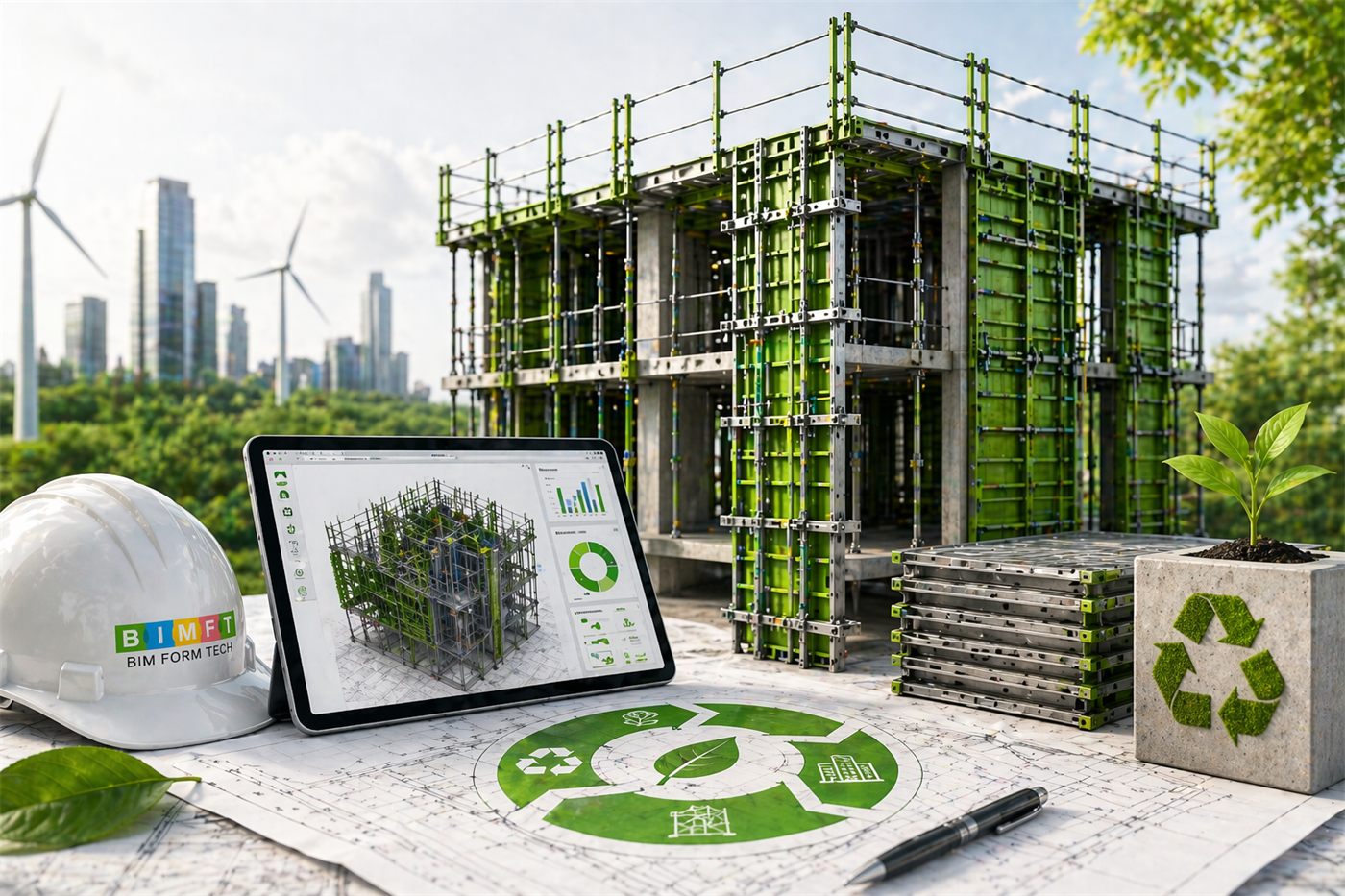
A high-level technical interpretation of lifecycle assessment, reuse cycles, wear-out tracking, and why formwork should be treated as a durable engineered asset rather than a disposable site expense.
Why this matters
The construction industry consumes enormous quantities of raw material, and cast-in-place concrete depends heavily on temporary works. Conventional timber formwork can be attractive on day-one cost, but repeated disposal creates a major lifecycle and waste burden.
Hybrid formwork systems change that equation by combining durable frames with reusable panels. The business case improves when the design team tracks reuse, maintenance, damage, logistics, and end-of-life recovery from the start.
Formwork becomes a premium asset when BIM tracks its lifecycle, not just its geometry.
The BIMFT interpretation
BIMFT does not treat sustainability as a brochure claim. The practical opportunity is to attach lifecycle parameters to formwork families, then use the model to understand reuse cycles, repair points, replacement timing, logistics, and site quality risks.
- Carbon parity point: Hybrid systems may start with higher embodied carbon, but become more efficient once reuse cycles accumulate.
- Wear-Out Coefficient: A model parameter can track panel condition, reuse history, stripping damage, and resurfacing need.
- Quality assurance: Degraded panels can be flagged before they affect finish quality or create rework.
- Procurement predictability: Replacement and maintenance budgets become visible before the site is under pressure.
Implications for contractors
For high-rise and repeat-floor construction, the value is not only environmental. Strong lifecycle planning can reduce procurement surprises, lower logistics churn, support green certification documentation, and give site teams a cleaner decision path for reuse.
Read the referenced paper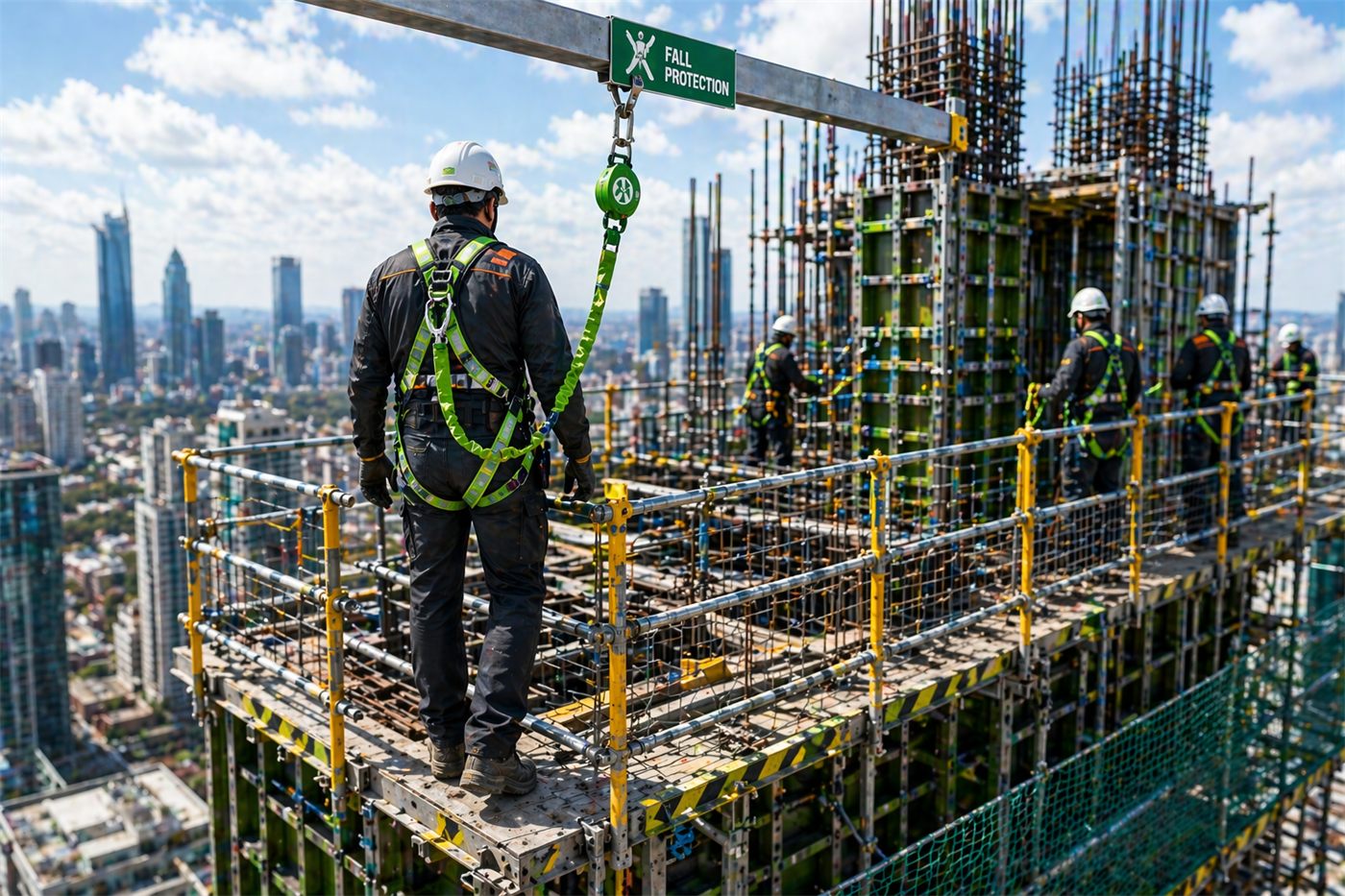 Safety Engineering
High-Rise Formwork
Advanced Fall Protection System in Formwork Erection
A safety-focused engineering note on edge protection, bracket planning, pre-assembly, and how fall protection can be designed into the temporary works sequence rather than added late on site.
The site risk
Falls from height remain one of the most severe construction hazards, especially during rapid erection of vertical structural elements, cores, lift shafts, and exterior columns. Traditional edge protection often arrives after the workface has already become dangerous.
Safety should be engineered into the formwork assembly sequence, not improvised after lifting.
Fall Protection Holder concept
The Fall Protection Holder is planned as a reusable edge protection interface that works with modular formwork assemblies. It is intended to lock into structural nodes and support guardrails, mid-rails, and toe-board planning without creating unnecessary delays.
- Heavy-duty bracket assembly: Designed around secure connection points rather than ad-hoc clamps.
- Runner compatibility: Allows timber or steel guardrail members to be planned as a continuous protection line.
- Toe-board logic: Reduces tool and material fall risk for workers below.
- BIM placement: Bracket locations can be checked against crane points, rebar congestion, pour access, and stripping sequence.
Execution protocol
- BIM planning: Map every bracket location and detect clashes before installation.
- Ground pre-assembly: Attach brackets while panels are in a safer working position.
- Runner installation: Slide guardrails through planned holder loops and secure the line.
- Lifting and erection: Move the form with protection already integrated where site conditions allow.
- Pouring and striking: Keep protection stable during work, then recover and cycle it with the formwork.
Operational return
The value is not only safety compliance. Better planning can reduce crane hook-time for separate protection systems, simplify labor activities, and make reusable safety hardware part of the same logic as reusable formwork.
Have a formwork or safety planning challenge?
Send drawings, site constraints, and the construction sequence. BIMFT can help frame the right BIM-led engineering review.
